
 OPEN ORIGINAL PDF ↗
2011 / 126 pages
Southeast Asia efficiency study
Six-country analysis, model assumptions and sector comparisons.
Read the context ↗ReEx / Expertise
Align the capital, the technical evidence and the market context. Start with the question that stands between your project and its next decision.
You know the project.
What will make it financeable?
A funding request needs more than a promising technology. Connect the ownership, commercial model, risk allocation and development stage to an investor mandate.
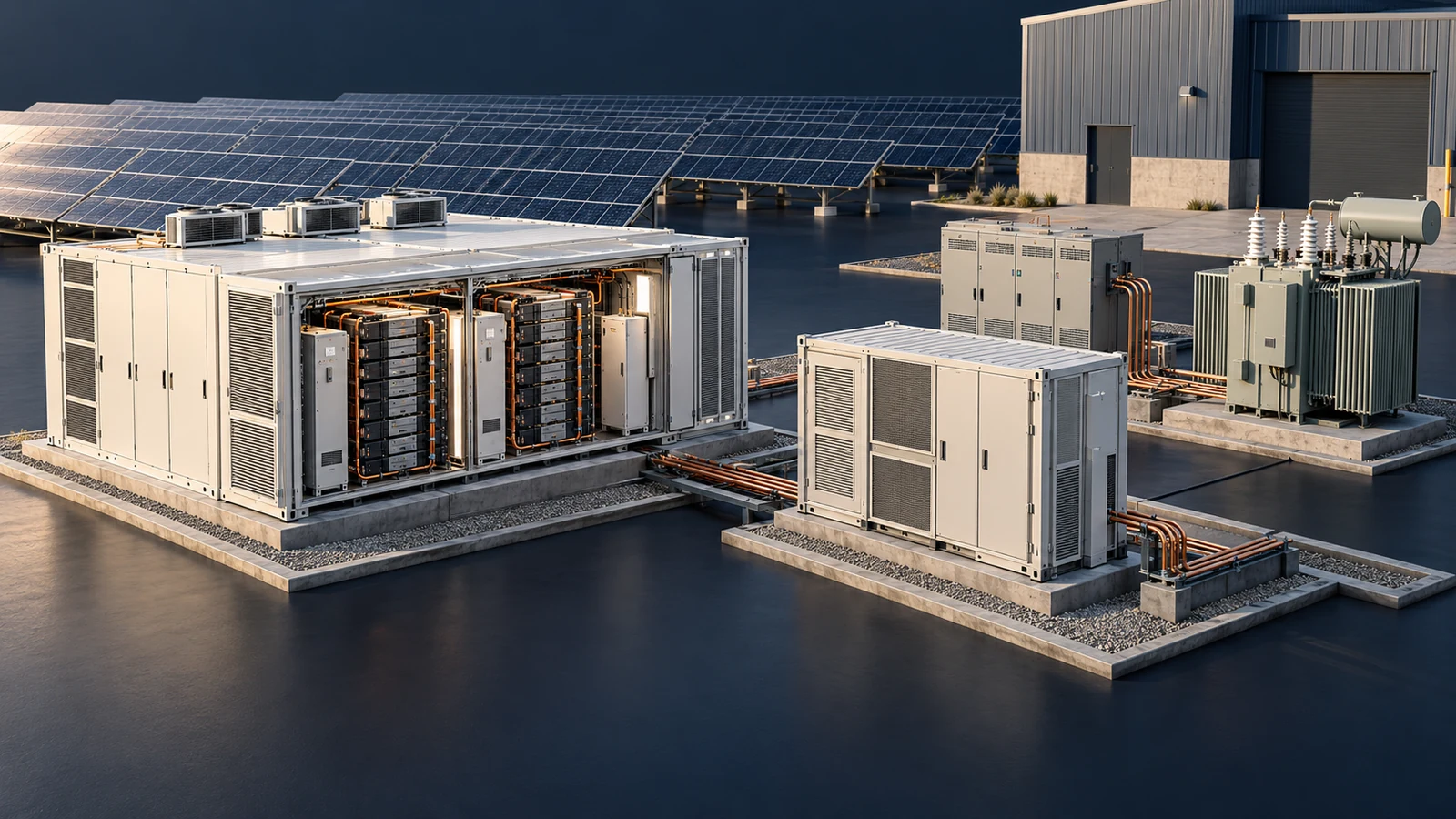
PV modules supply electricity. Energy yield depends on the resource, layout and operating conditions.
Battery racks illustrate stored energy. Capacity, degradation, thermal management and safety require project-specific evidence.
Inverters and converters manage electrical conversion. The arrangement shown is illustrative; actual AC- or DC-coupled designs differ.
Switchgear and a transformer represent the connection boundary. Confirm the connection agreement, protection and operating requirements.
Solar resource → electrical conversion → storage or dispatch → connection
DOE: solar systems integration ↗Five connected questions before a transaction can move forward.
Define ownership, site rights and the development stage.
Connect revenue, operating costs and the capital request.
Index contracts, permits, technical studies and open issues.
Compare mandates, risk allocation and proposed financing.
Resolve conditions and agree the achievable next step.
You see an improvement.
What would prove its value?
Separate what is measured from what is assumed. Establish the operating baseline, specify the intervention and identify the evidence needed to approve the next stage.
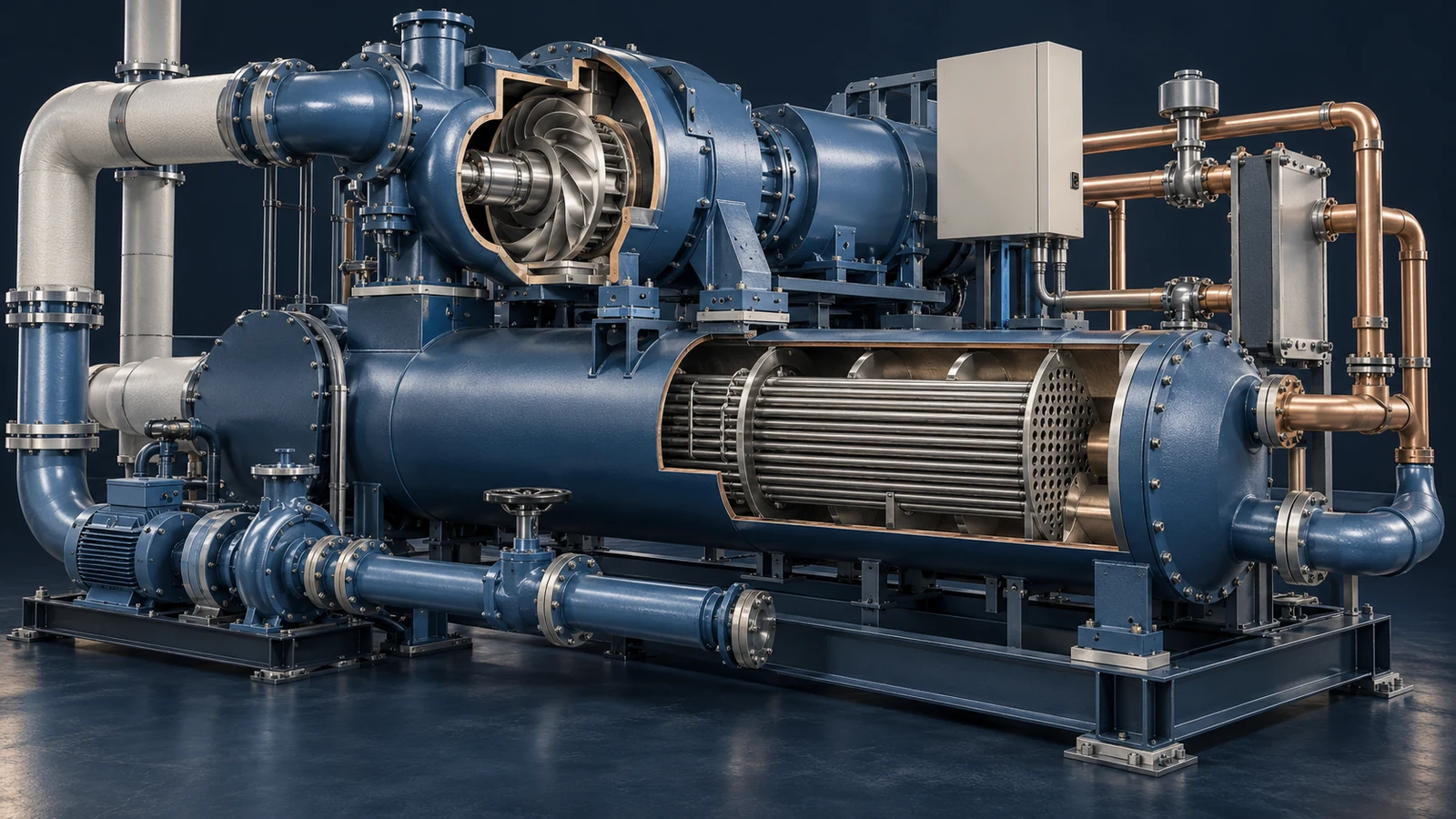
The open casing illustrates rotating machinery within the cooling system. It is not a manufacturer-specific internal design.
The visible tube bundle illustrates a heat-transfer surface. Equipment selection requires temperatures, flows and service conditions.
Auxiliary equipment is part of the energy boundary. Include pumping and operating schedules when evaluating a retrofit.
An attractive equipment design does not establish savings. Record baseline conditions and agree how changes will be measured.
Define the service → record the baseline → assess the intervention → verify performance
DOE: baseline and verification planning ↗Illustrative annual consumption, with operating conditions held constant.
Less USD 4,000 recurring expense = USD 20,000 net annual saving.
1,000,000 × 20% = 200,000 kWh saved. 200,000 × USD 0.12 = USD 24,000 gross annual saving. USD 24,000 − USD 4,000 = USD 20,000 net annual saving. Taxes, financing and other project-specific costs are excluded.
You see an opportunity.
What changes the decision?
Regional demand is a starting point. Research the policy, commercial structure and delivery conditions that can change a project’s location, scope or financing route.
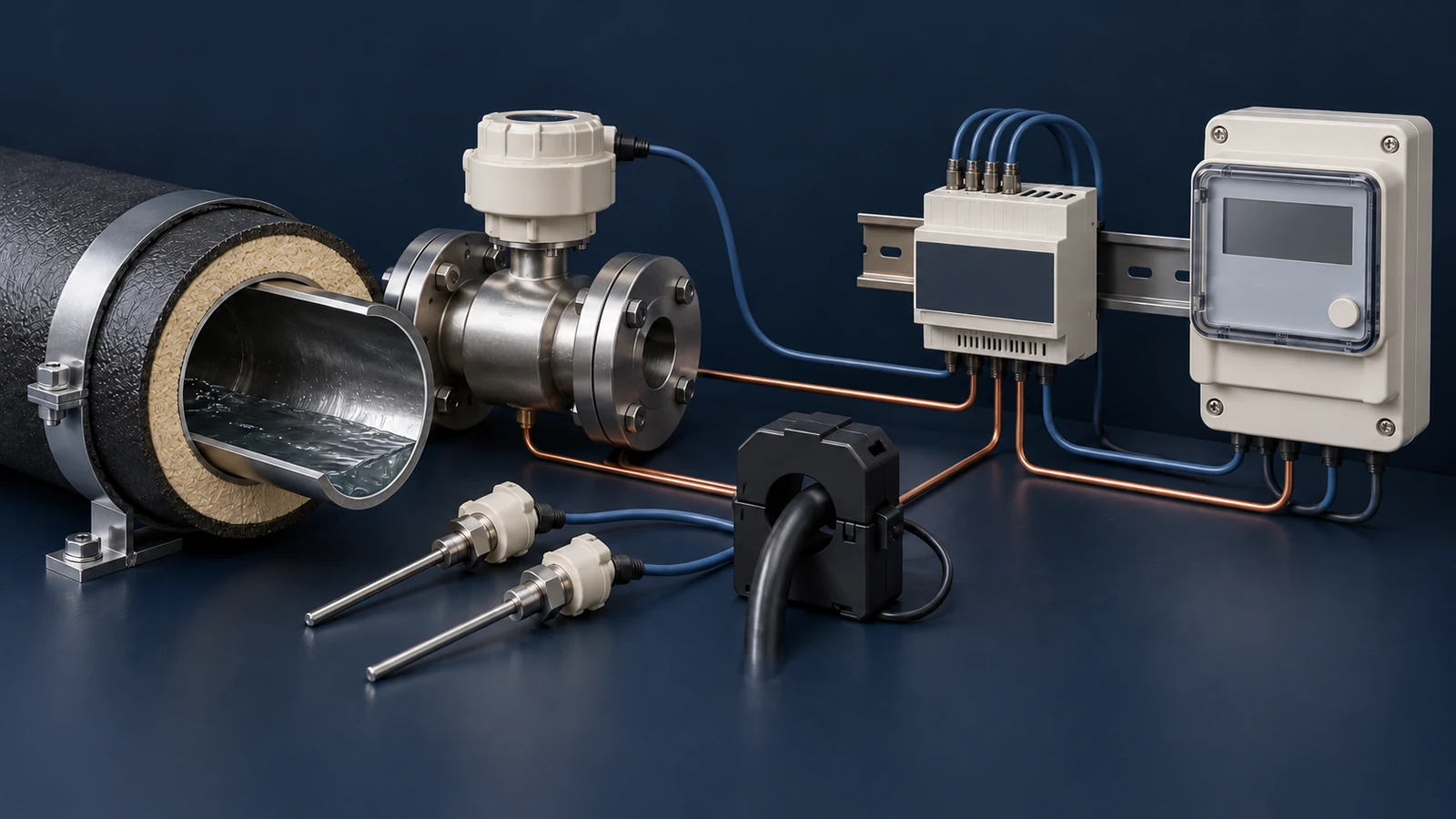
Representative sensors illustrate the information available at a fluid-system boundary. The required measurements depend on the question.
The current transformer and meter represent electrical evidence. Specify measurement points, intervals, units and instrument suitability.
A logger represents a dated record. Blank displays deliberately show no invented readings or client results.
Relate observations to operating conditions and a defined baseline. Document assumptions before converting energy changes into financial claims.
Measurement boundary → observations → recorded data → comparison with a baseline
DOE: measurement and verification ↗Estimated gross investment opportunity in industrial energy efficiency, USD million.
| Country | USD million |
|---|---|
| Indonesia | 808 |
| Malaysia | 530 |
| Philippines | 294 |
| Singapore | 521 |
| Thailand | 417 |
| Vietnam | 368 |
Find your starting point
Choose the decision you are working towards. This guide suggests a reading route; it does not score or approve the project.
State the amount, currency, instrument and decision the funding should enable. Assemble the ownership, contracts and model evidence.
Explore this routeCollect the baseline energy records, operating schedule and expected intervention. Identify which assumption needs an audit or a measurement.
Explore this routeState the country, sector and decision. Specify which policy, price or delivery condition could change the project.
Explore this routeHow the work connects
Define the project, development stage, open question and output needed.
Review the technical, commercial and market evidence. Assign owners to the gaps.
Agree the study, project scope or capital process that the evidence supports.
Not sure which evidence is missing?
Use the readiness checklistA turbine-generator is one part of the investment case. Explore the conversion stage, then follow the guide to resource uncertainty and development evidence.
Read the geothermal development guide ↗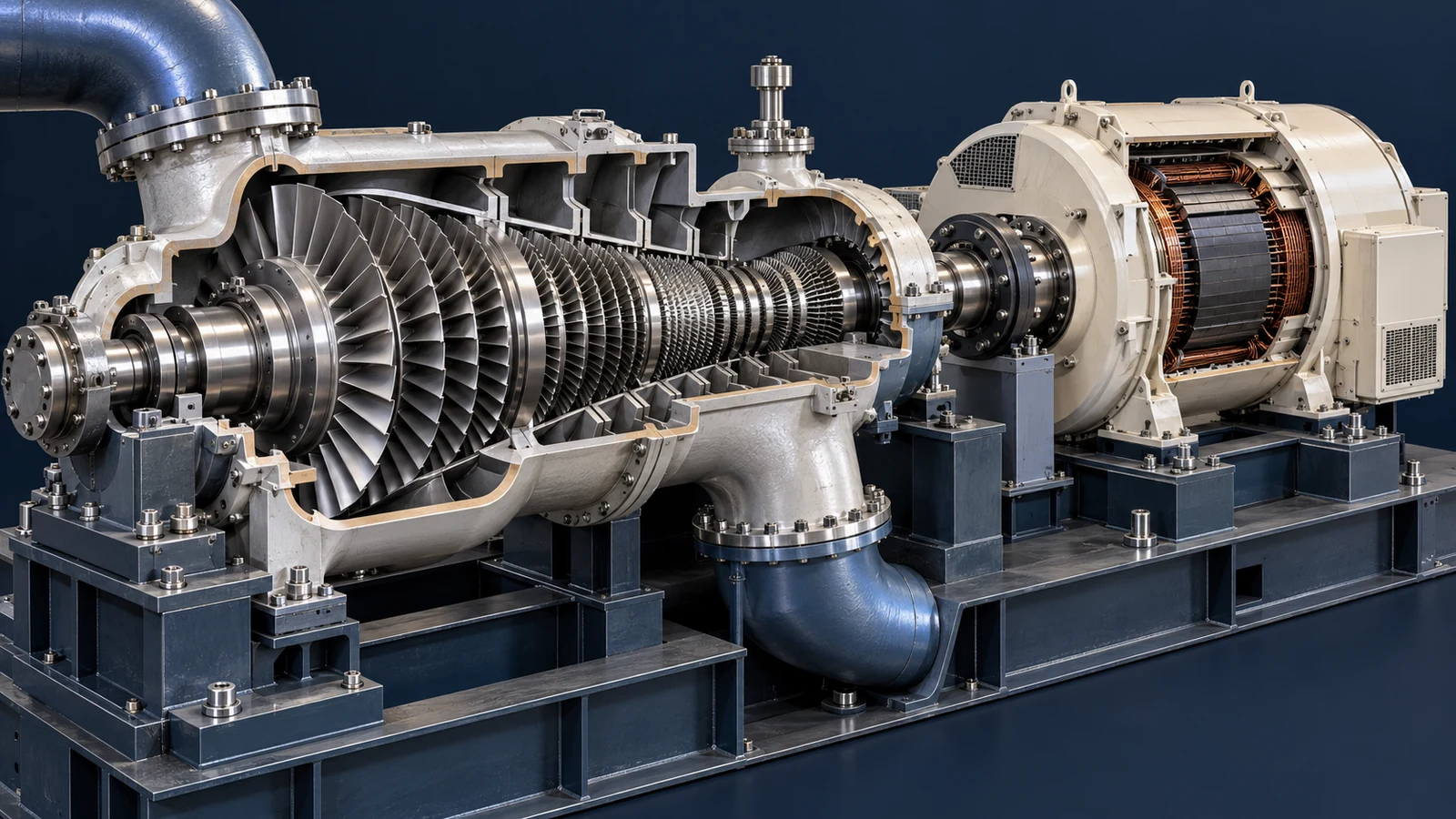
The blade stages illustrate conversion of working-fluid energy into shaft rotation. The geometry is conceptual, not a turbine specification.
The common shaft connects the rotating equipment to a generator. The open housing illustrates windings and the electrical conversion stage.
Wells, reservoir conditions, fluid handling and the complete cooling system are outside this image. A turbine picture cannot establish resource viability.
Dry-steam, flash and binary-cycle plants use different arrangements. Match the selected technology to resource evidence and development-stage risks.
Thermal resource → working-fluid cycle → turbine rotation → generator output
DOE: geothermal power-generation technologies ↗Original publications, preserved with their dates. Explore the evidence behind the company record and research.
OPEN ORIGINAL PDF ↗Six-country analysis, model assumptions and sector comparisons.
Read the context ↗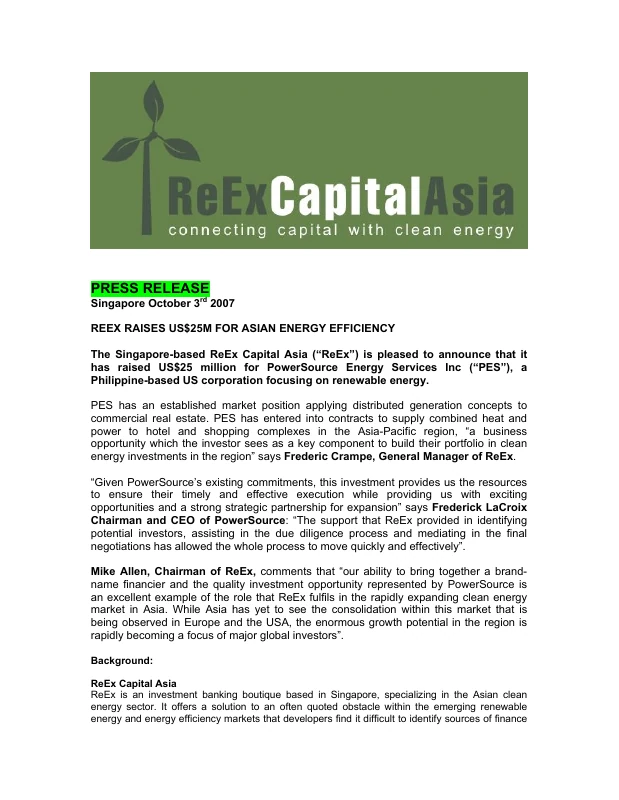 OPEN ORIGINAL PDF ↗
The original USD 25 million announcement and ReEx’s advisory role.
Read the context ↗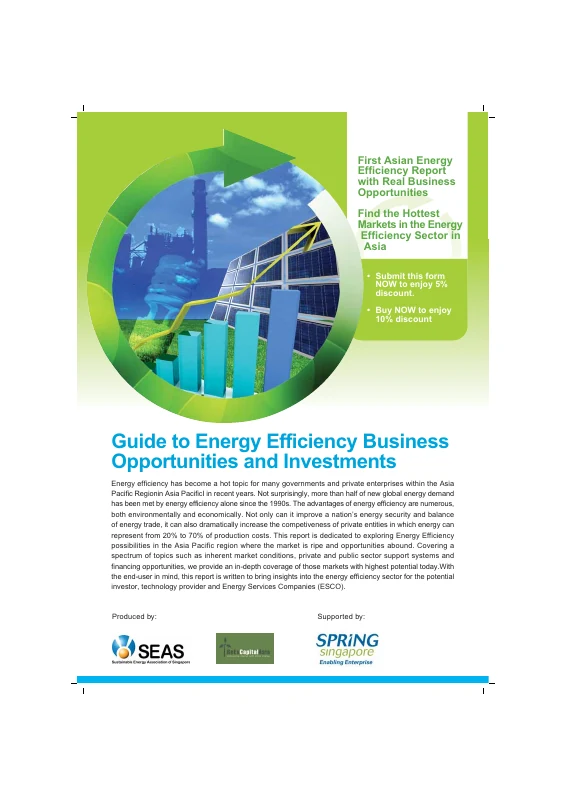 OPEN ORIGINAL PDF ↗
The original ordering form describes an earlier 12-country publication. Ordering terms are historical.
Read the context ↗These are historical publications, not current licences, certifications or independently verified performance guarantees.
A useful first conversation
Location, technology, development stage and the decision you want to make next.
A folder labelled “technical” is not a usable evidence request. Identify the investment question, the document that could answer it and the limits of the conclusion. The fictional solar example below requests a review; it does not describe a financed project or an engineering certification.
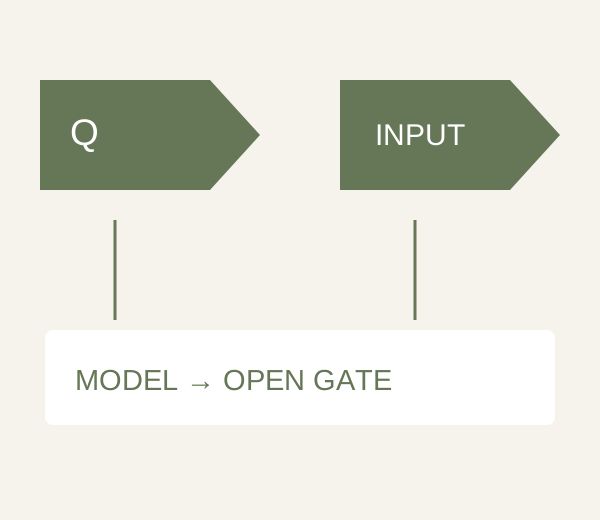
| Field | Example or check |
|---|---|
| Fictional request ER-01 | Decision: can the preliminary annual generation estimate proceed to independent assessment? Project: one proposed ground-mounted solar site. |
| Input register | Layout L2; equipment sheet E1; resource series R1. Grid export limit and permitted site boundary unresolved; identify their owners before relying on the estimate. |
| Requested output | Annual/monthly generation model with loss assumptions, input provenance, sensitivity to unresolved constraints and a list of exclusions. |
| Acceptance check | Open the model and match its site, layout and equipment versions to the request. Require an explanation when a missing input is assumed rather than verified. |
| Blank request | Decision __; project boundary __; supplied files/versions __; missing evidence __; required output __; uncertainty __; reviewer __; next gate __. |
A conceptual request cannot establish technical feasibility, a power price, grid access or bankability. Use qualified project-specific review for those decisions.
Sources: ReEx — project-finance due diligence · IRENA — project facilitation
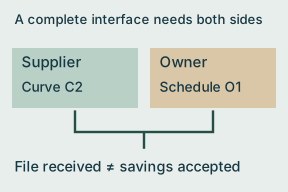
An equipment offer is easier to review when each interface names an input, an owner and an acceptance question. Supplier performance data and the project owner’s operating records answer different parts of the case. Neither alone proves project savings or financing readiness.
A project owner is considering a cooling upgrade. The supplier offers a performance curve at stated inlet conditions. The owner has historical energy bills but no matched operating-hours record. This is a teaching case, not a ReEx installation, quotation, engineering design or measured saving.
Interface I-03: supplier curve C2 received, model and conditions identified. Owner schedule O1 incomplete: operating hours missing for two months. Decision: equipment evidence can enter the review folder; annual savings claim remains unaccepted. Next step: owner resolves the schedule gap and the qualified reviewer agrees a suitable comparison method.
The US DOE’s federal ESPC guidance explains the role of measurement and verification in that programme. Its contractual requirements are specific to its jurisdiction and procurement framework. The interface exercise here borrows no promise of a federal guarantee and does not establish equivalent rules in another country.
Copy: interface ID ___; decision ___; equipment document/version/conditions ___; owner input/version/gap ___; auxiliary and connection boundary ___; responsible party ___; evidence required ___; delivery check ___; technical acceptance check ___; open condition and next date ___. Keep contractual scope, qualified technical review and a financing decision distinct.
US Department of Energy: Measurement and Verification for Federal ESPCs