
Why resource risk changes the funding sequence
A geothermal project can have strong surface evidence and still face material subsurface uncertainty. Before a proven production resource exists, a financing proposal must explain what is known, what remains uncertain and which evidence the next expenditure will produce.
Do not apply operating-asset financing assumptions to an exploration programme. Development funds need an explicit stage-gate logic and a consequence if the results do not support the planned capacity.
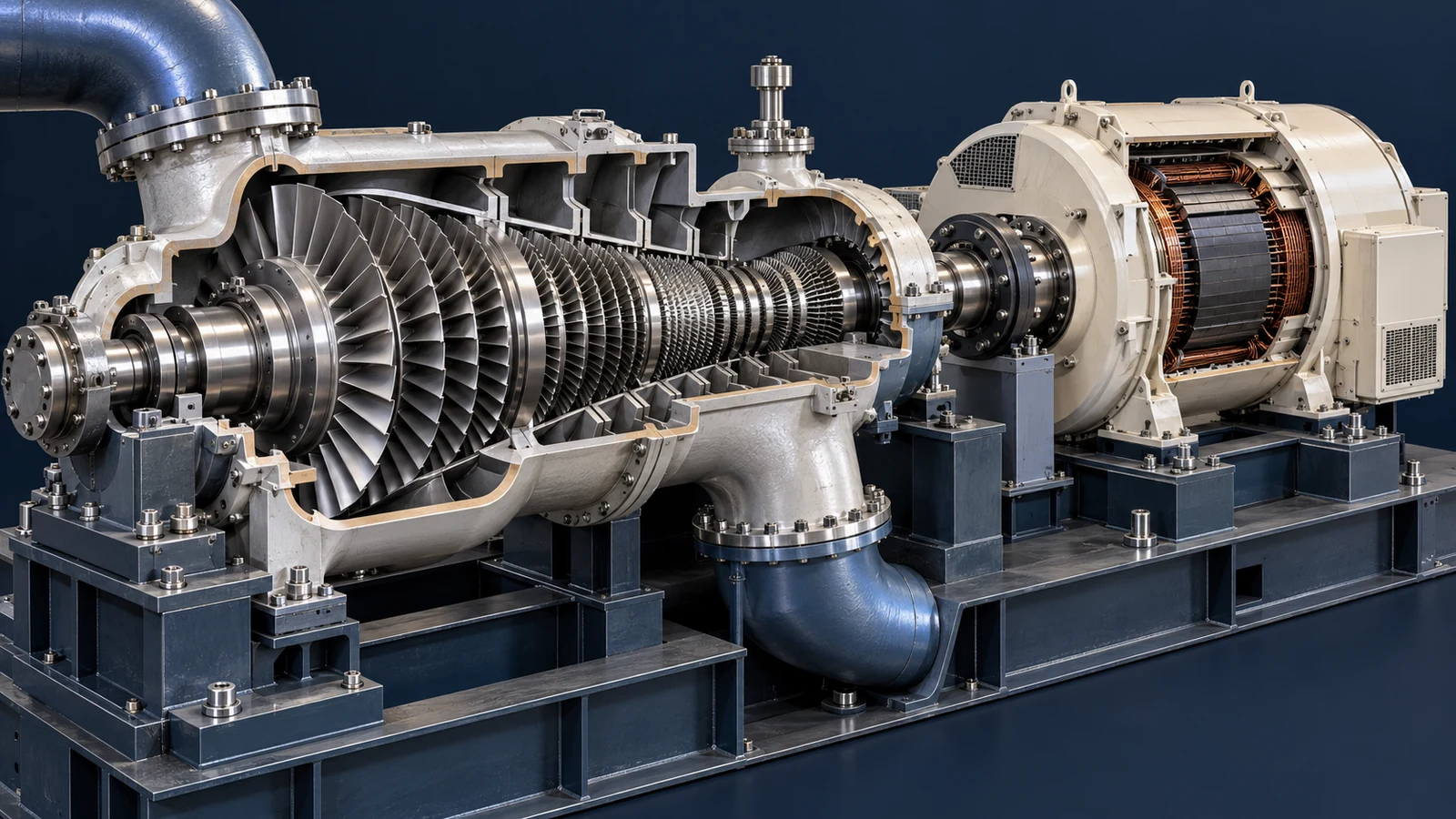
Explore the components and the decision
- Turbine
The blade stages illustrate conversion of working-fluid energy into shaft rotation. The geometry is conceptual, not a turbine specification.
- Shaft and generator
The common shaft connects the rotating equipment to a generator. The open housing illustrates windings and the electrical conversion stage.
- Plant boundary
Wells, reservoir conditions, fluid handling and the complete cooling system are outside this image. A turbine picture cannot establish resource viability.
- Development evidence
Dry-steam, flash and binary-cycle plants use different arrangements. Match the selected technology to resource evidence and development-stage risks.
Thermal resource → working-fluid cycle → turbine rotation → generator output
DOE: geothermal power-generation technologies ↗
Read the diagram as text
Screen: Rights + geoscience → Explore: Drilling + interpretation → Develop: Resource + contracts → Operate: Performance + reinjection
A practical development sequence
- Preliminary screening
Establish the concession or access position, available geological information, environmental setting and a development hypothesis.
- Exploration
Integrate geoscience evidence and define a drilling plan, budget, access and decision criteria.
- Resource confirmation
Review well results, reservoir assumptions and the evidence for a deliverable production plan.
- Project development
Coordinate steam-field design, power plant, grid connection, permissions, offtake and construction interfaces.
- Construction and commissioning
Track contractor responsibilities, testing and completion requirements.
- Operation
Monitor resource performance, reinjection, well maintenance, plant availability and contract obligations.
Put each risk beside its evidence
| Resource | Well data, reservoir interpretation and independent technical review. |
| Drilling | Well design, contractor capability, contingency, schedule and unsuccessful-well exposure. |
| Environmental and social | Site-specific assessment, water and land issues, engagement and required permissions. |
| Commercial | Offtake conditions, tariff, dispatch, payment security and change-of-law exposure. |
| Interface | Clear responsibilities between steam field, power plant and grid connection. |
Questions for a financing discussion
Which expenditure is needed before the next capacity decision? What evidence would justify proceeding? Which outcomes would reduce the project scope or stop development? Who owns the interpretation and who independently reviews it?
Keep exploration results separate from a production forecast. If mitigation relies on insurance, a guarantee or a public facility, verify current eligibility, exclusions, payout conditions and programme availability from the provider.
About the source page
The archived April 2012 catalogue listed Brief Notes on Geothermal Project Development: Stages, Risks and Mitigation Measures as a forthcoming resource. A finished historic document was not recovered. This page is an original 2026 guide to the same subject and makes no claim to reproduce a missing publication.
Sources & further reading
Source dates and reporting periods apply. External publishers do not endorse this website.
Separate a funded evidence package from an approved power plant
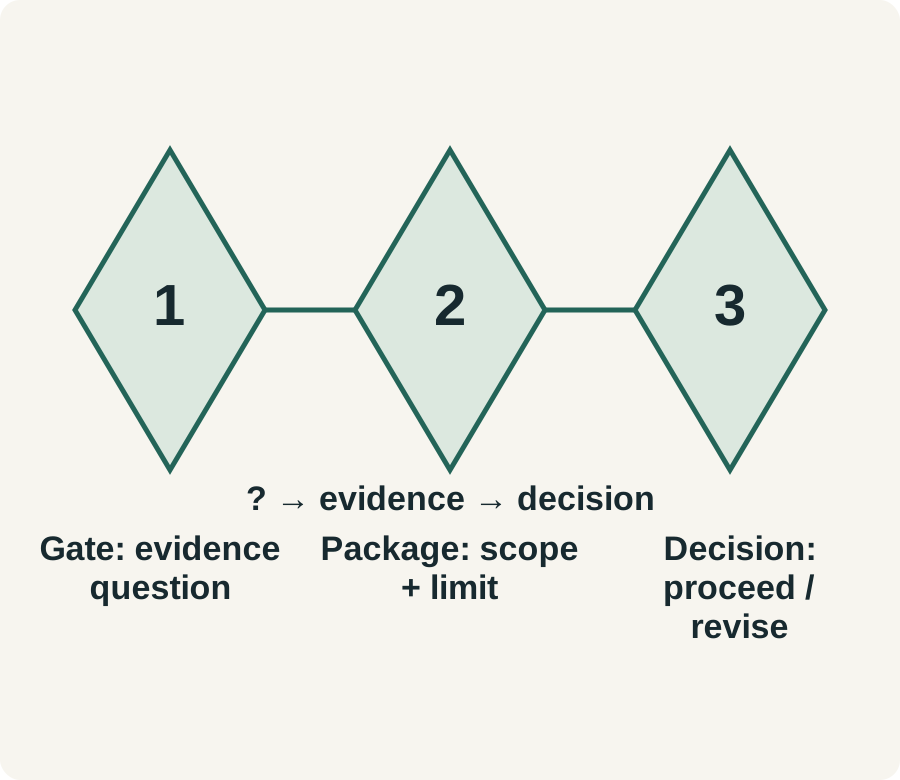
A budget approved for learning about a resource is not approval to construct a generating plant. Write the next evidence gate as a bounded decision. The following example is fictional and gives no project-cost benchmark or financing offer.
- Name the uncertainty and the specific evidence needed to change the development decision. Identify the qualified interpretation and review responsibilities.
- Separate the proposed work package, its spending limit, dependencies and exclusions from later development expenditure. Unconfirmed rights, access or permissions remain explicit prerequisites.
- Agree the possible decisions before work begins: proceed to a defined next review, revise scope, seek further evidence or stop. A completed report is not automatically a positive resource finding.
Filled gate card: question: does the available evidence justify designing a confirmation programme? Proposed package: review existing geoscience and identify information gaps; output: source-linked interpretation and an uncertainty register; excluded: drilling, a production forecast and construction approval; next decision owner: the project sponsor after technical review. No field result has been observed in this example.
Record: question __; evidence/output __; qualified review __; dependencies __; package limit __; exclusions __; decision options __. DOE's exploration and characterisation overview explains why subsurface evidence matters; it does not validate this fictional package, confirm a reserve or establish eligibility for any current funding programme.
Source: www.energy.gov.